When it comes to choosing between an exercise bike and an elliptical for weight loss, both cardio machines offer exceptional calorie-burning potential, but they cater to different muscle groups and impact levels. Stationary bikes excel at lower-body endurance, targeting the quads, hamstrings, and glutes while providing robust support for high-intensity interval training (HIIT). On the other hand, elliptical cross-trainers engage your entire upper and lower body simultaneously, delivering a full-body workout that reduces perceived exertion while protecting your joints from high-impact stress. Understanding how each machine aligns with your fitness goals, joint health, and calorie deficit targets is key to maximizing your weight loss results at home. In fact, both of these machines consistently rank among the best workout machines for reducing belly fat.

Benefits of Ellipticals for Weight Loss
Ellipticals are ideal for simulating the feeling of running or walking indoors. Exercising on an elliptical cross trainer is relatively easy on your joints. However, it still produces slightly more impact than riding a stationary bike. Regardless, elliptical machines remain much safer for joints than running outside or using a treadmill.
Furthermore, using an elliptical requires engaging your entire body. This full-body movement activates most major muscle groups simultaneously. This elevated engagement quickly increases your heart rate and burns stubborn body fat. In general, ellipticals can burn slightly more calories than standard exercise bikes. Ultimately, your total calorie burn depends heavily on your personal workout intensity.
Drawbacks of Elliptical Machines
Although ellipticals offer incredible benefits, they do have a few noticeable drawbacks. First, they are considerably larger and bulkier than standard exercise bikes. People with small home gym spaces may struggle to fit an elliptical. Additionally, the standing movement is harder on your joints than seated cycling. Therefore, they may not suit older adults or individuals recovering from lower-body injuries. Finally, the elliptical stride feels unnatural to some, occasionally causing mild hip strain.
Benefits of Indoor Exercise Bikes
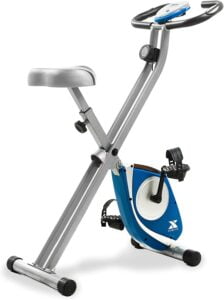
Next, let us discuss the benefits of exercise bikes. These highly popular gym machines perfectly simulate the experience of outdoor cycling. Because your body rests on a seat, stationary bikes cause minimal joint impact. You do not have to support your full body weight while exercising. As a result, they are perfect for individuals needing joint-friendly cardio. Furthermore, stationary bikes remain one of the most compact cardio machines available today. If you’re unsure which model suits you best, reviewing the different types of stationary bikes can help you make an informed decision.
Their compact footprint makes them incredibly easy to store in tight corners. Additionally, modern smart bikes often feature highly engaging virtual fitness communities. Riders can enjoy real-time digital racing against friends and global competitors. Popular platforms like Peloton have completely revolutionized this interactive indoor cycling experience.
Limitations of Indoor Exercise Bikes
Despite being a fantastic home gym addition, stationary bikes possess a few limitations. First, the bike must be manually adjusted between different household users. You must carefully adjust the seat height, handlebars, and pedal straps for safety. In contrast, you simply step onto an elliptical and immediately begin exercising. Additionally, seated bikes burn slightly fewer calories than full-body elliptical machines.
Which Machine Burns More Calories?
When your primary goal is weight loss, understanding the exact calorie burn of each machine is essential. According to data from Harvard Medical School, a 155-pound person exercising for 30 minutes at a moderate intensity will burn approximately:
- Elliptical Trainer: 324 calories
- Stationary Bike: 252 calories
Because an elliptical engages your upper body—including your arms, chest, and back—alongside your legs, it naturally demands more energy and yields a higher calorie burn during steady-state cardio. However, stationary bikes can quickly close this gap if you utilize High-Intensity Interval Training (HIIT). By significantly cranking up the magnetic resistance and performing rapid sprinting intervals, indoor cyclists can match or even surpass the calorie-burning potential of an elliptical in a shorter amount of time.
The Final Verdict for Weight Loss
However, you can easily increase bike resistance and exert maximum effort for incredible results on either machine. In summary, your choice depends entirely on your specific home gym needs:
- Choose an Elliptical if: You have sufficient space, a flexible budget, and want an intense, full-body cardio session.
- Choose an Exercise Bike if: You have a compact home gym, a limited budget, and require a low-impact workout.
Leave a Reply